

Open-Weight LLM · Private & Custom AI
MiMo-V2.5-Pro-FP4-DFlash
Trillion-parameter MoE backbone for private, high-throughput agent automation—FP4-quantized experts + speculative decoding for cost-controlled agentic reasoning at scale.
MiMo-V2.5-Pro-FP4-DFlash is a 1T-parameter open-weight model optimized for inference speed and memory efficiency via expert-only FP4 quantization and block-diffusion speculative decoding. For ops teams, it's a foundation for building private autonomous agents (support, code, knowledge work) without the latency or licensing friction of closed APIs.
Model facts
Private deployment
Run MiMo-V2.5-Pro-FP4-DFlash in your own environment
Self-hosted via SGLang with tensor/expert parallelism across multi-GPU clusters. Companies deploy it in their own VPC or on-premise, controlling the full inference stack and keeping all operational data within their environment. Requires substantial hardware (see hardware section) but eliminates per-token API costs and vendor lock-in for continuous agent workloads.
Operational AI use cases
Internal Helpdesk & Knowledge Agent
Deploy MiMo as a private support chatbot that reasons over internal docs, FAQs, and runbooks. Long-context window (1M tokens) allows it to ingest entire knowledge bases; speculative decoding keeps response latency low. Agent tools can ticket systems, CRM, or Slack—all data stays in-house.
Code Review & Engineering Ops
Use MiMo's code reasoning (SWE-Bench Pro: 58.8%) to automate pull-request review, refactoring suggestions, and CI/CD incident triage. The model can parse large codebases (1M context) and propose fixes without leaving your deployment; self-host to avoid exposing proprietary source.
Finance & Compliance Document Processing
MiMo's agent capabilities enable autonomous parsing of contracts, invoices, and regulatory filings—extracting line items, flagging risks, and routing approvals. Private deployment ensures sensitive financial data never touches external APIs; tools integration can wire to accounting systems.
Custom AI
As a base for custom AI
Strong foundation for building proprietary reasoning agents. The MoE architecture and 1M context window support custom tools (search, APIs, databases) and fine-tuning on domain data (legal, medical, finance). Expert-only quantization means you can target niche tasks without retraining the full model—layer adapters or LoRA on non-expert modules.
In the operating system
Where it fits
Backbone inference engine in a private AI operating system. Sits below the agent orchestration layer (tool calling, planning, memory), receives high-level user intents and long-context retrieval results, and outputs structured or freeform reasoning. Pairs with workflow automation (state machines, approval loops) and internal APIs for end-to-end ops automation.
Data control & security
Private deployment means all inference happens in your infrastructure—no tokens, requests, or outputs leave your network. This is an architectural advantage, not a claim about the model itself. Compliance teams can audit model outputs, redact PII before inference, and enforce data residency. Quantization (FP4) reduces storage footprint, lowering blast radius of any data exfil. MXFP4 still carries unknown side channels—security posture depends on your infrastructure, not the model.
Hardware footprint
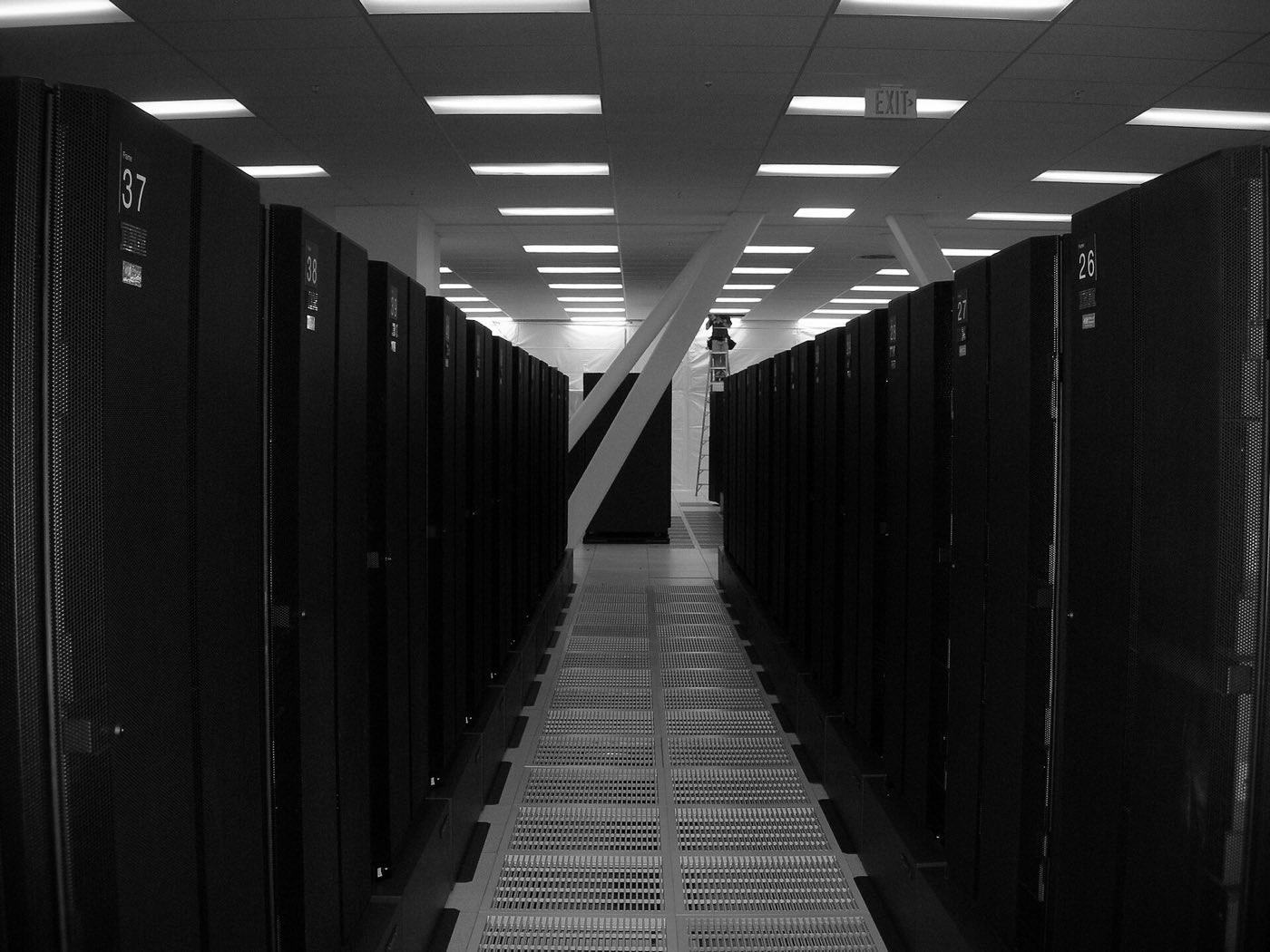
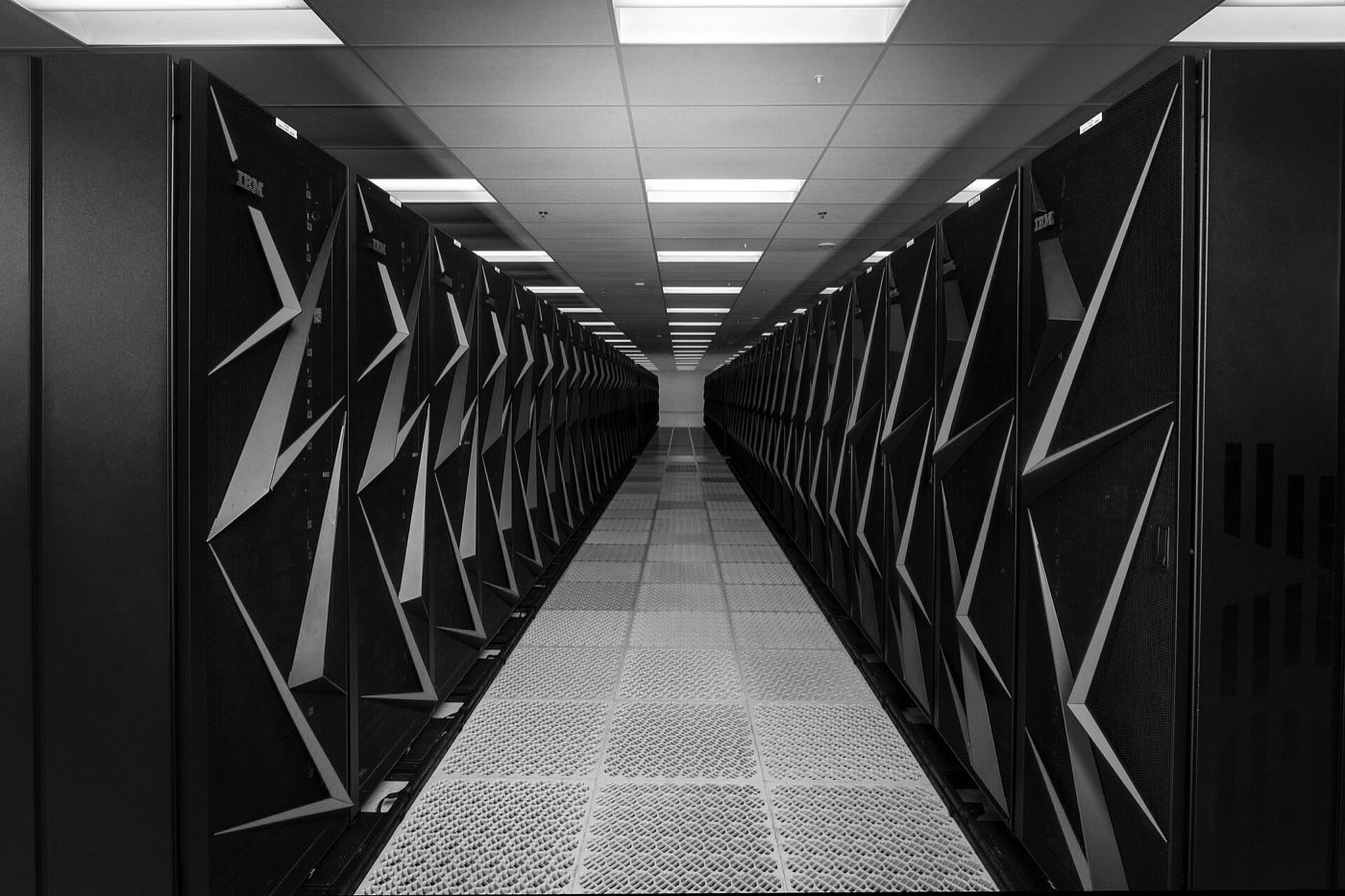
Backbone (1.02T active params, MXFP4 + mixed): ~1.2–1.5 TB VRAM minimum (70-layer MoE, 128 heads, GQA). Drafter (5-layer, BF16): ~50–80 GB. Practical deployment: 8× H100 (80GB) or 16× A100 (80GB) for single-node, or larger multi-node clusters for TP=16/EP=16 (see SGLang example). Speculative decoding trades compute for reduced backbone forward passes—not a VRAM saver, a throughput amplifier. **Estimate only—profile on target hardware.**
Integration
SGLang is the reference deployment runtime (required for DFlash speculative decoding). Wire via OpenAI-compatible `/v1/completions` or `/v1/chat/completions` endpoints; use standard LLM frameworks (LangChain, LlamaIndex) to chain tools. Tensor parallelism across GPUs requires NCCL-aware distributed setup. Custom code must be reviewed (model card flags `custom_code`); audit before production. Drafter lives in `dflash/` subdirectory—auto-loaded by SGLang with `--speculative-algorithm DFLASH` flag.
When it's not the right fit
- —Sub-second latency required: even with speculative decoding, trillion-parameter models have inherent latency floor; for <100ms SLOs, smaller quantized models (7B, 13B) are better.
- —Small teams / sparse inference: private deployment overhead (NCCL, multi-GPU orchestration, SGLang ops) heavy for infrequent or low-volume queries; API-based inference lighter.
- —No long-context need: 1M window overkill if your tasks fit in 8K–32K; smaller models cheaper and faster.
- —Full model fine-tuning required: MoE + FP4 quantization makes PEFT and full-model QAT complex; standard models simpler to adapt.
Alternatives to consider
Meta Llama 3.1 (405B)
Comparable scale, permissive Llama 2 license, strong reasoning. No speculative decoding or expert-only quantization built-in; requires custom optimization. Fewer long-context benchmarks.
DeepSeek V3 (671B)
Larger, multi-token prediction focus, strong code/math. Permissive license. Heavier hardware footprint; speculative decoding not native to release artifacts.
Alibaba Qwen2.5 (72B, 110B quantized variants)
Lighter, proven ops fit, permissive license. Trade-off: smaller context (128K vs. 1M), fewer parameters, but lower VRAM and faster iteration on custom tasks.
Related open models
FAQ
Can I run MiMo-V2.5-Pro-FP4-DFlash on-premise with no internet?
Yes. Download the model weights and drafter once; SGLang runs fully offline once initialized. Ensure you have tensor-parallel GPU setup (NCCL) and enough VRAM. No cloud calls or license checks required.
Is this open-weight model free for commercial use?
Model is MIT-licensed (permissive). You can build and sell products on top. Verify with legal—MIT covers the model weights, not your derivative training data or business use. Check Xiaomi's terms if you use their APIs/platform.
How do I customize this for my domain (e.g., legal docs)?
Start with LoRA or adapter layers on non-expert modules (attention, embeddings). Expert FP4 quantization makes full fine-tuning harder; consider expert-layer LoRA (unknown community adoption). Or use retrieval-augmented generation (RAG) to feed domain docs into long context without retraining.
What's the throughput vs. cost trade-off with speculative decoding?
DFlash proposes 8-token blocks per draft forward pass; acceptance rates are 3–6 tokens (see model card). Roughly 3–6x speedup in tokens/sec, but backbone verification cost stays. Break-even depends on hardware utilization; worth profiling on your instance and workload.
Ready to Build Private Reasoning Agents?
LLM.co helps ops teams architect fully self-hosted AI systems on open-weight models like MiMo. From deployment planning to tool integration and domain fine-tuning—keep your data in-house and own your AI stack. Let's design your private agent infrastructure.