



Open-Weight LLM · Private & Custom AI
MiniMax-M1-40k
A 456B parameter open-weight model for enterprises building private, custom AI agents and automating operational workflows without cloud dependency or data residency concerns.
MiniMax-M1-40k is a 456 billion parameter text-generation model released under Apache 2.0, designed for conversational and agentic tasks with a 40k token context window. For ops teams, it's a deployable foundation for building internal AI systems—support automation, document processing, workflow agents—while keeping all data on your infrastructure.
Model facts
Private deployment
Run MiniMax-M1-40k in your own environment
Self-host via transformers + vLLM (both listed in supported frameworks). At 456B parameters, expect ~912 GB VRAM in fp16 (estimate: A100 80GB × 12+ or equivalent multi-GPU cluster, or quantized fp8/int8 on smaller setups). Apache 2.0 license places no restrictions on private hosting; data never touches a third-party API. Operational win: full audit trail, no vendor lock-in, HIPAA/SOC2-ready if your infrastructure meets compliance.
Operational AI use cases
Internal Support & Knowledge Chatbot
Deploy M1-40k as a retrieval-augmented Q&A bot over internal wikis, SOPs, and ticketing data. Agents can route queries, fetch context from Confluence or S3, and draft responses—all on your servers. Reduces Tier 1 support volume without external SaaS tooling.
Workflow Document Processing & Tagging
Auto-classify invoices, contracts, HR forms, and support tickets using the model's 40k context to digest full documents. Pipe outputs to your ERP, HRIS, or CRM via API. No per-token cloud billing; cost is infra-amortized.
Sales & Ops Agentic Loop
Build autonomous agents that summarize CRM notes, compose outreach drafts, flag deal risks, or audit pipeline data. Self-hosted model means your customer conversation data stays internal; agents operate deterministically within your security boundary.
Custom AI
As a base for custom AI
Strong foundation for building proprietary AI products: fine-tune on your operational domain (customer support language, internal jargon, compliance tone), add custom system prompts and retrieval layers, and ship as a white-label or internal service. Apache 2.0 permits commercial derivatives without attribution.
In the operating system
Where it fits
Core inference engine in LLM.co's knowledge/agent layer: sits between your data connectors (docs, APIs, databases) and workflow orchestration (task dispatch, multi-step reasoning, tool calling). Use it to power agents that read contexts, make decisions, and trigger downstream actions—replacing or augmenting GPT-4 calls for ops workflows.
Data control & security
Self-hosting on your infrastructure means no training data exposure, no third-party logs, no surprise ToS changes. You own the audit trail. However: the model's safety/bias properties are Unknown (requires review of arxiv:2506.13585); Apache 2.0 does not guarantee GDPR/HIPAA compliance—your deployment architecture and operational procedures do. Encryption, access control, and monitoring are your responsibility.
Hardware footprint
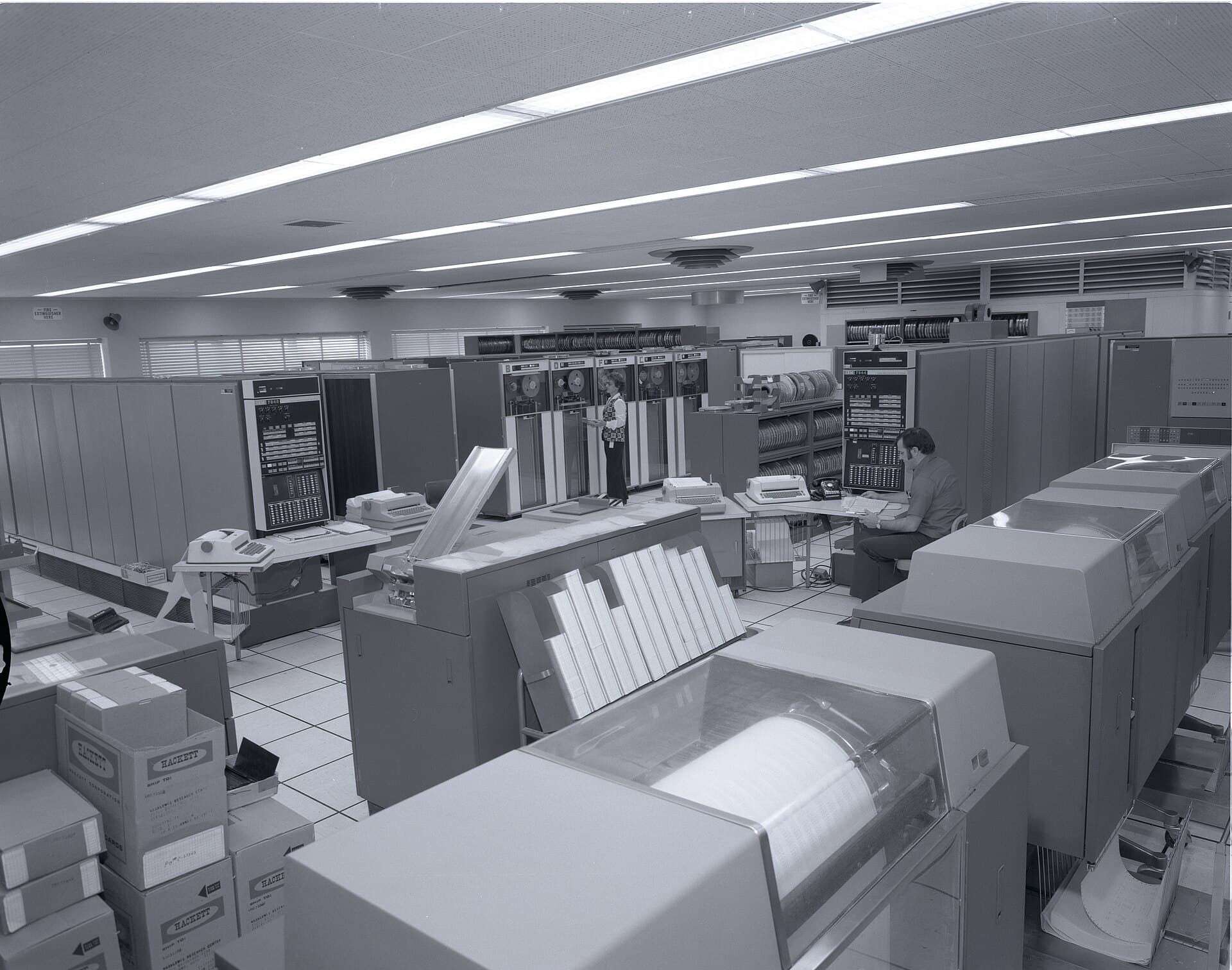
Estimate: 912 GB VRAM (fp16), ~456 GB (int8 quantization). At full precision, ~12× A100 80GB or 2–3× A100 NVLink; quantized int8 feasible on 6–8× A100 or similar. Actual varies by batch size and context usage. No official specs provided; verify on your target hardware.
Integration
Supports transformers and vLLM APIs, making it compatible with LangChain, LlamaIndex, and custom agents. Requires orchestration glue: vector DB (Pinecone, Weaviate), function calling layer, prompt engineering, and retry/fallback logic. No built-in enterprise auth; layer behind your own API gateway and identity provider (Okta, Entra ID). Gated=false means no HF approval bottleneck.
When it's not the right fit
- —Latency is critical (<100ms p99): 456B requires significant hardware and inference time; consider smaller 7–70B models for real-time APIs.
- —You need guaranteed safety/alignment benchmarks: no eval results, no known safety training in provided metadata—requires testing before production.
- —Context window is fixed at 40k: if you routinely need to ingest 100k+ token documents, plan for multi-pass or chunking strategies.
- —Your team lacks MLOps capacity: deployment, tuning, monitoring, and rollback of a 456B model are non-trivial operational commitments.
Alternatives to consider
Llama 3.1 405B (Meta)
Comparable scale, stronger open-source eval results and community tooling; less exotic infrastructure if you're already in the Llama ecosystem.
Qwen2.5 72B (Alibaba)
Smaller, lower VRAM footprint, excellent instruction-following and multi-turn support; better for teams with tighter hardware budgets but still enterprise-grade.
Mixtral 8×22B (Mistral)
Sparse mixture-of-experts architecture; lower effective compute cost at similar quality; good middle ground between speed and capability for ops workflows.
Related open models
FAQ
Can I fine-tune M1-40k on my proprietary data, and keep it private?
Yes. Apache 2.0 permits fine-tuning and commercial use. Your tuned weights remain yours. Standard practice: fine-tune on secure infrastructure (on-prem or private cloud), validate on a staging cluster, then deploy to production. No license restrictions; your data practices and compliance burden remain.
What is the 40k context window used for in ops?
Full-document ingestion without chunking: entire contracts, multi-page invoices, long email threads, or conversation histories. Enables richer context for agents making decisions. Trade-off: longer inference time and VRAM per request. For short Q&A, you won't fully utilize it; for workflow document processing, it's valuable.
Is this production-ready for customer-facing use?
Technically yes (runs via vLLM), but operationally requires your testing: no published safety benchmarks, no eval results in metadata. Recommend: build a test harness, run adversarial prompts, compare output to your SLAs, then gate behind human review or secondary approval layers. Community feedback (185 HF likes, 41k downloads) is modest—not yet battle-tested at scale.
How do licensing and commercial use work?
Apache 2.0 is permissive: you can build products, modify, and redistribute (with license notice). No commercial restrictions. If you add custom code or integrate proprietary workflows, you own those. The model itself is open; your IP is your IP.
Build Your Private Ops AI with M1-40k
Self-host a 456B reasoning engine on your infrastructure. LLM.co helps you integrate M1-40k into custom workflows—support agents, document processing, agentic automation—while keeping data secure and costs transparent. Let's architect your ops AI stack.