







Deploying Private AI Agents With MCP Servers Safely
A practical guide to deploying private AI agents with MCP servers inside your perimeter, with scoped tools, audit trails, and no data exfiltration.

Private MCP server deployment means never letting a tool call, a credential, or a retrieved document leave infrastructure the enterprise controls. Treat every tool description as untrusted input to the model.
Invariant Labs showed why on May 26, 2025, when it demonstrated that a public GitHub issue could coerce a developer's AI agent into leaking data from private repositories without compromising any MCP tool itself.
The Model Context Protocol has become the default way agents talk to tools, and the attack surface is already well mapped. The sections below cover network placement, tool scoping, OAuth brokering, audit routing, and defenses against prompt-injection-driven exfiltration for teams running MCP inside a regulated environment.
What MCP Is and Where It Breaks
MCP is a JSON-RPC client-server protocol Anthropic open-sourced in late 2024, with Block and Apollo named among the first adopters. Clients embed in IDEs and chat surfaces; servers expose tools, resources, and prompts to whichever model the client is driving. The protocol is deliberately small, which is useful and dangerous in equal measure: a server that returns a tool definition is handing the model text that the model will treat as instruction.
The OWASP project has catalogued the resulting failure modes in its MCP Top 10. The ten entries worth planning around are token mismanagement, scope creep, tool poisoning, supply chain tampering, command injection, intent flow subversion, weak authentication, missing audit telemetry, shadow MCP servers, and context over-sharing. Each one has a counterpart in the deployment pattern below.
Keep Servers Inside the Trust Boundary
Run MCP servers in the same network segment as the data they expose. A server that reads from a document store belongs beside the store, not behind an internet-facing proxy. For single-user developer workflows, stdio transport keeps the server local to the workstation. For shared services, streamable HTTP inside a private VPC, with mutual TLS between the agent runtime and the server, keeps the protocol off the public network entirely.
The same rule the team applies to self-hosted model endpoints behind a firewall applies to MCP servers: no ingress from the internet, egress limited to the systems each server was built to call, and no shared service account across unrelated servers. An on-prem MCP gateway that terminates client sessions, enforces mTLS, and routes to the right internal server is the simplest way to apply policy once rather than per-server.
Scope the Tool Surface by Role
Agents do not need every tool a server can offer. A support bot that reads tickets does not need the tool that edits them. A code-review agent that reads diffs does not need write access to the repository. OWASP's scope-creep entry exists because MCP clients tend to accept whatever tool list a server advertises, and models tend to call whatever they are allowed to call.
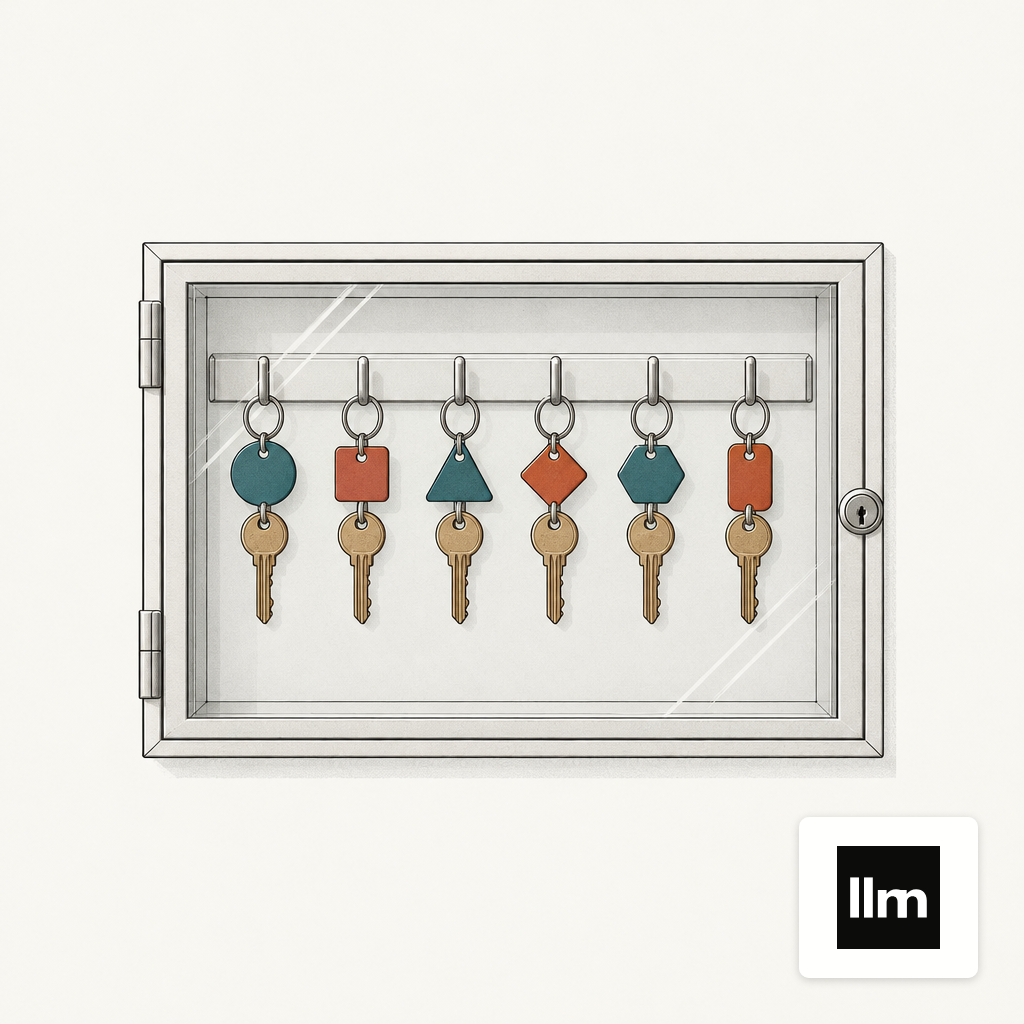
A workable pattern is a per-role tool manifest held outside the server: a signed file that enumerates the exact tools an agent may see, pinned by name and by content hash of the tool description. Changes require review before the agent can load them. This is close to what the team recommends for private AI agents generally: deny by default, allow by explicit enumeration, and refuse to execute a tool whose description has changed since the last review.
Broker Credentials, Do Not Hand Them Over
The March 2025 MCP authorization specification requires OAuth 2.1 with PKCE for all clients, built on OAuth 2.0 Authorization Server Metadata and Dynamic Client Registration. Compliance with the spec is the floor, not the ceiling. In a regulated deployment, the agent runtime should never hold a long-lived credential for a downstream system.
A credential broker in front of the MCP server exchanges the agent's short-lived identity for a system token scoped to the specific tool call. Tokens expire in minutes, carry the user identity they were issued on behalf of, and never land in the agent's context window. The LLM Appliance pattern treats this gateway as a first-class component rather than an afterthought, because token sprawl is how OWASP's MCP01 entry plays out in practice.
Route Every Call to a SIEM
Every MCP call should produce an audit record: client identity, agent identity, tool name, arguments, result bytes or hash, latency, and the authenticated end user whose session triggered it. These go to the SIEM the rest of the environment already feeds, with the same retention policy as other privileged access logs. OWASP's audit-telemetry entry and its shadow-MCP-servers entry are two sides of the same hole: if there is no central log, a team can stand up a new server and no one will notice.
Observability tooling built for LLM traffic sits on top of the SIEM feed. Teams running self-hosted LLM observability stacks can tag every span with the MCP tool invoked, which turns the audit trail into a usable incident timeline instead of a pile of JSON. The IBM figures below are a reminder of what weak telemetry costs when a shadow deployment goes wrong.
Defend Against Tool Poisoning and Indirect Injection
On April 1, 2025, Invariant Labs documented tool poisoning attacks in which malicious instructions embedded in an MCP tool description are invisible to the user but fully visible to the model. The same technique enables tool shadowing, where a compromised server rewrites the behavior of a trusted one. Pinning tool descriptions by hash blunts the tampering vector; requiring human review on any change blunts the rest.
Indirect prompt injection is the harder half. A tool that reads a GitHub issue, a Jira ticket, or an email is pulling text that may contain instructions aimed at the model. Treat any tool output that flows back into the model context as untrusted content, strip or escape instruction-like structure where the use case allows, and constrain the tools the agent can call after reading untrusted input. Human-in-the-loop confirmation on any write-side tool, scoped to actions that cross a trust boundary, is a reasonable backstop. Enterprises that already run an LLM security audit on their RAG stack should extend it to every MCP server in the environment, not only the ones written in-house.
What Changes in the Next Twelve Months
The deadline shaping deployment decisions through 2027 is the EU AI Act. Binding requirements for most high-risk AI systems apply from December 2, 2027, with embedded-product rules following in August 2028. Agentic systems acting on behalf of users in regulated domains will fall under those obligations, and audit trails sufficient to reconstruct a tool call sequence are the minimum evidence a conformity assessment will ask for.
Expect the MCP specification to tighten over the same window: narrower default scopes, stricter server identity, and clearer rules for what a tool description may contain. Teams that have already hosted their servers privately, brokered credentials through a gateway, pinned tool manifests, and routed every call to the SIEM will not need to retrofit. Teams that treated MCP as a developer convenience will spend the year catching up.
Eric Lamanna is a Digital Sales Manager with a strong passion for software and website development, AI, automation, and cybersecurity. With a background in multimedia design and years of hands-on experience in tech-driven sales, Eric thrives at the intersection of innovation and strategy—helping businesses grow through smart, scalable solutions. He specializes in streamlining workflows, improving digital security, and guiding clients through the fast-changing landscape of technology. Known for building strong, lasting relationships, Eric is committed to delivering results that make a meaningful difference. He holds a degree in multimedia design from Olympic College and lives in Denver, Colorado, with his wife and children.

Build Your Own Autonomous Agents with Private LLMs

Why Autonomous AI Agents Need On-Prem Isolation

Managed Private LLM Hosting Versus Self-Managed GPU Servers Compared

AI Agents for Finance Teams: Reconciling, Reporting, and Reviewing at Scale

Hundreds of LLM Servers Lay Sensitive Data Bare in Healthcare, Corporate and Legal

How AI Agents Reduce IT Ticket Volume by Automating First Response
Bringing AI in-house, the right way.
Talk through your private or on-prem LLM deployment with an expert who has shipped them in regulated environments.
Private AI, in your inbox.
Occasional, high-signal notes on enterprise LLM deployment, security, and model strategy. No spam.