


Qwen3 Embedding, BGE, and Voyage Nano Compared for Private RAG
Compare Qwen3 Embedding, BGE, and Voyage Nano plus matching rerankers for private RAG, with retrieval quality, latency, VRAM, and licensing side by side.

The two models that most shape retrieval quality in a private RAG stack are the embedding model and the reranker, and the credible open-weight shortlist in 2026 is short: Qwen3 Embedding, BGE-M3, and voyage-3-large. Only two of them can run inside your network.
voyage-3-large sets the quality ceiling but is API-only, which takes it off the on-premises shortlist. The real decision for regulated workloads is between Qwen3 Embedding and BGE-M3, paired with a cross-encoder reranker that fits alongside both on the same GPU.
The Three Models On One Page
Qwen3 Embedding shipped in mid-2025 from Alibaba under Apache 2.0 in three sizes (0.6B, 4B, and 8B parameters), each with a 32,768-token context and default output dimensions of 1024, 2560, and 4096 respectively. Matryoshka Representation Learning lets you truncate the vector without retraining. The 8B variant took the top MTEB multilingual slot at release.
BGE-M3, released by BAAI, is an XLM-RoBERTa derivative that outputs 1024-dimensional dense vectors, accepts up to 8,192 tokens, covers more than 100 languages, and ships under the MIT license. In a single forward pass it performs dense, sparse (lexical), and ColBERT-style multi-vector retrieval. That three-head output is why BGE-M3 is still the default choice for multilingual private corpora where dense recall alone misses low-frequency terms.
voyage-3-large (released January 2025) supports a 32K-token context and Matryoshka tiers at 2048, 1024, 512, and 256 dimensions. Voyage reports it beating OpenAI's text-embedding-3-large by a meaningful average across 100 internal evaluation datasets. The weights are not published; the model is reachable only through the Voyage API.
VRAM and Throughput on the Hardware You Own
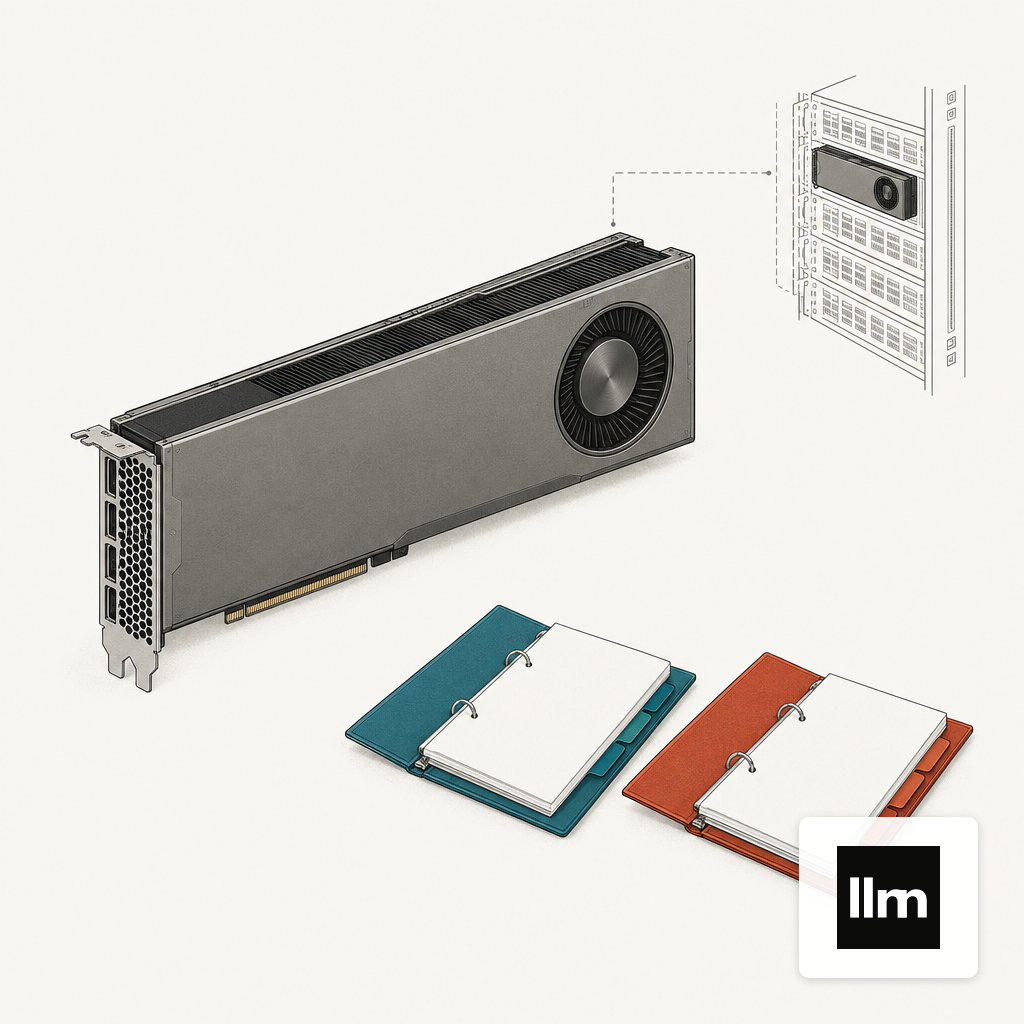
Memory and throughput on your own silicon are the next gate. Qwen3-Embedding-8B needs roughly 16 GB in FP16 before batching headroom, which fits on a single L40S with room for a reranker and a small generation model alongside. The 4B variant runs comfortably on a shared H100. The 0.6B variant fits on an A10 or an L4 and makes sense when you want to embed millions of chunks nightly without blocking inference traffic.
BGE-M3 at roughly 568M parameters fits in under 2 GB of VRAM and batches aggressively. One A10 can serve a 200-user corpus with the dense, sparse, and ColBERT heads enabled at the same forward-pass cost, which collapses three retrieval strategies into one encode step.
The serving layer carries as much weight as the choice of weights. Embedding throughput on vLLM or SGLang varies substantially by batch size, tokenizer, and prefix caching; the mechanics and the trade-offs between frameworks are covered in a prior inference server comparison.
Where MTEB and MMTEB Agree
MTEB has become the de facto rate card for embedding retrieval quality, and its multilingual slice is what procurement reviews typically compare. MMTEB extends evaluation to more than 500 quality-controlled tasks across 250+ languages and adds instruction following, long-document retrieval, and code retrieval, which looks closer to the shape of actual enterprise work than the original 58-dataset suite.
Two observations fall out. Qwen3's 4B model scores within 1.2 points of the 8B, so a smaller footprint costs little headline quality. BGE-M3's multilingual score trails the top of the pack, but its sparse and ColBERT heads give it recall characteristics the aggregate score does not capture. On a keyword-heavy legal or clinical corpus, that matters more than the leaderboard position.
Benchmarks lie about your corpus. A high score on MTEB does not predict performance on whatever your matter files or claims archive actually look like. Treat any leaderboard as a shortlist generator, then rerank candidates against a 500-document gold set drawn from your own documents. The shortlist that survives that step is usually different from the one the leaderboard suggests.
The Reranker Does More Lifting Than the Embedding Model
A bi-encoder scores a query against millions of candidate vectors in milliseconds. A cross-encoder reads the query and each candidate together, which is accurate and slow. The split is deliberate: retrieve 200 candidates cheaply, then rerank the top set in roughly 100 ms on the same GPU.
For on-premises deployment, BAAI's bge-reranker-v2-m3 is the default private option: a lightweight multilingual cross-encoder paired with BGE-M3, built on the same base, released under a commercial-friendly open-weight license. It runs in low single-digit GB of VRAM, batches alongside the embedding model, and uses the same tokenizer family, which reduces engineering surface. Qwen3 ships its own reranker that pairs cleanly with Qwen3 Embedding on the same infrastructure.
Voyage publishes rerank-2 and rerank-2-lite, but those are hosted. For an on-prem stack they are not an option. The practical rule is to pick embedding and reranker from the same family. Mixed tokenizers and mismatched model lineages make failure modes harder to debug, and a retrieval chain with a dense head, a sparse head, a reranker, and a vector store already has enough moving parts without mixed vocabularies.
Licensing and the On-Premises Review
The compliance question is prosaic. Can we run this on silicon we own, without a per-token meter and without an outbound call? Apache 2.0 (Qwen3 Embedding and its reranker) and MIT (BGE-M3) both answer yes, with rights to use the weights commercially, modify them, and redistribute derivatives. voyage-3-large's weights are not published, so running it means a hosted API contract and the paperwork that comes with it.
For regulated workloads such as patient records, privileged files, and defense data, the open-weight path is the only path. The architecture work in a HIPAA-compliant private LLM build and the storage choices covered in vector databases for private RAG both assume embedding and reranker weights live on your hardware with no egress.
On-premises review usually comes down to three questions: what network calls does the serving process make, what license governs the weights, and whether the vendor can push updates you did not approve. Apache 2.0 and MIT weights, served on your own GPUs with outbound DNS blocked, pass all three without special pleading.
What to Deploy, and What You Give Up
Three deployment recipes cover most of what regulated teams actually ship:
- English-heavy corpus, 10 to 50 million vectors: Qwen3-Embedding-4B plus a Qwen3 or BGE reranker on a single L40S. Highest headline quality among the open-weight options.
- Multilingual corpus, dense plus sparse recall: BGE-M3 plus bge-reranker-v2-m3 on a pair of A10s. Lowest operational footprint and the broadest retrieval behavior.
- Mixed content, maximum retrieval quality, no on-premises requirement: voyage-3-large via API with rerank-2. Price the recurring query cost against the review burden before committing.
Choosing Qwen3 or BGE for on-premises control means ceding a few points of headline MTEB score to the best hosted model, and taking on the ops burden of model serving, monitoring, and upgrade cadence. In most regulated contexts that is the trade worth making. The alternative is a per-query meter and an outbound connection that general counsel will notice during the first SOC 2 review, and that the data residency clauses of the contract will not survive. For teams that would rather not build the serving layer themselves, the LLM Appliance ships embedding, reranker, vector store, and inference server preconfigured on hardware you own.
Timothy Carter is the Chief Revenue Officer. Tim leads all revenue-generation activities for marketing and software development activities. He has helped to scale sales teams with the right mix of hustle and finesse. Based in Seattle, Washington, Tim enjoys spending time in Hawaii with family and playing disc golf.

Pinecone, Qdrant, Weaviate, and pgvector Compared for Private RAG

How Do You Build a Permission-Aware Enterprise RAG System to Chat With SharePoint, SMB Drives, and S3?

vLLM vs TensorRT-LLM vs SGLang for Production Inference

Private LLM vs ChatGPT Enterprise on Cost, Security and Performance

Managed Private LLM Hosting Versus Self-Managed GPU Servers Compared

RAG vs Fine-Tuning vs Long-Context: Choosing the Right Architecture
Bringing AI in-house, the right way.
Talk through your private or on-prem LLM deployment with an expert who has shipped them in regulated environments.
Private AI, in your inbox.
Occasional, high-signal notes on enterprise LLM deployment, security, and model strategy. No spam.